Migraine, Hormones & Menopause: Is the Hormone Really the Problem?
A newly published study in Headache offers a useful reminder that migraine and hormonal treatment have a more complicated relationship than is sometimes assumed.
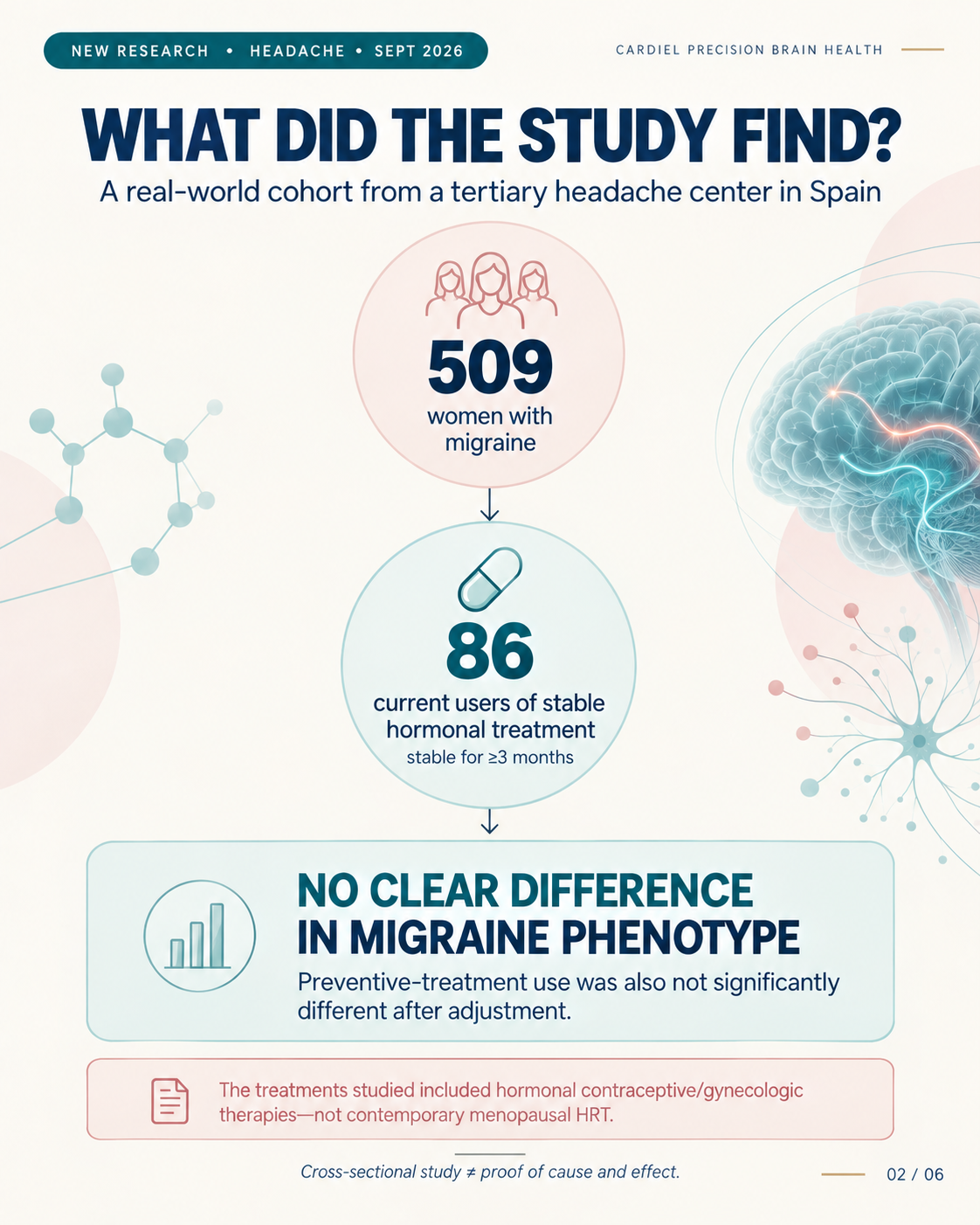
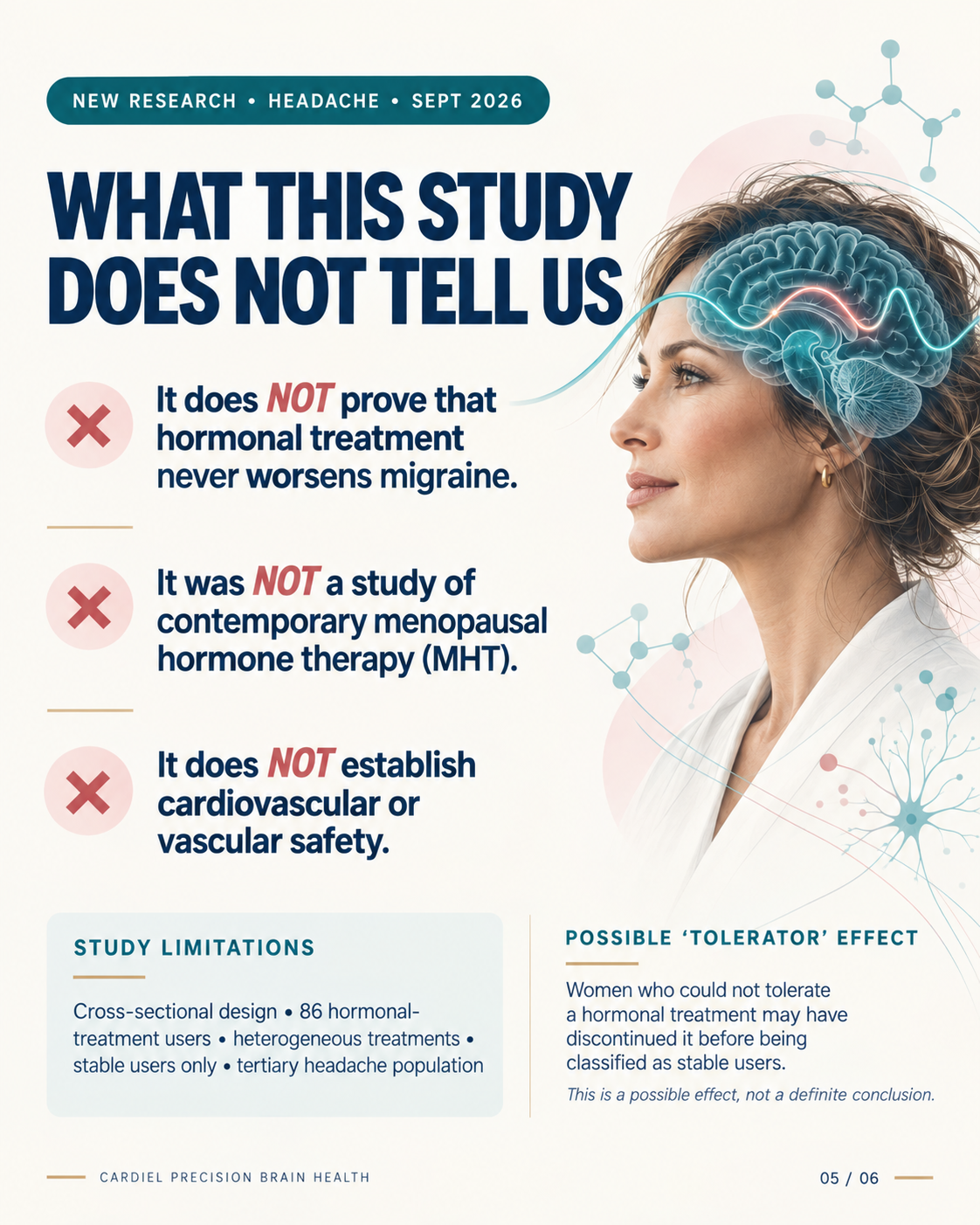
Among 509 women seen in tertiary headache clinics, those using a stable hormonal treatment did not have significantly different migraine characteristics or preventive-treatment use compared with women who were not using hormones. The study does not prove that hormones cannot worsen migraine, nor was it specifically a study of contemporary menopausal hormone therapy. It does, however, challenge the idea that the presence of migraine alone should automatically lead us to blame—or discontinue—an otherwise stable hormonal regimen.
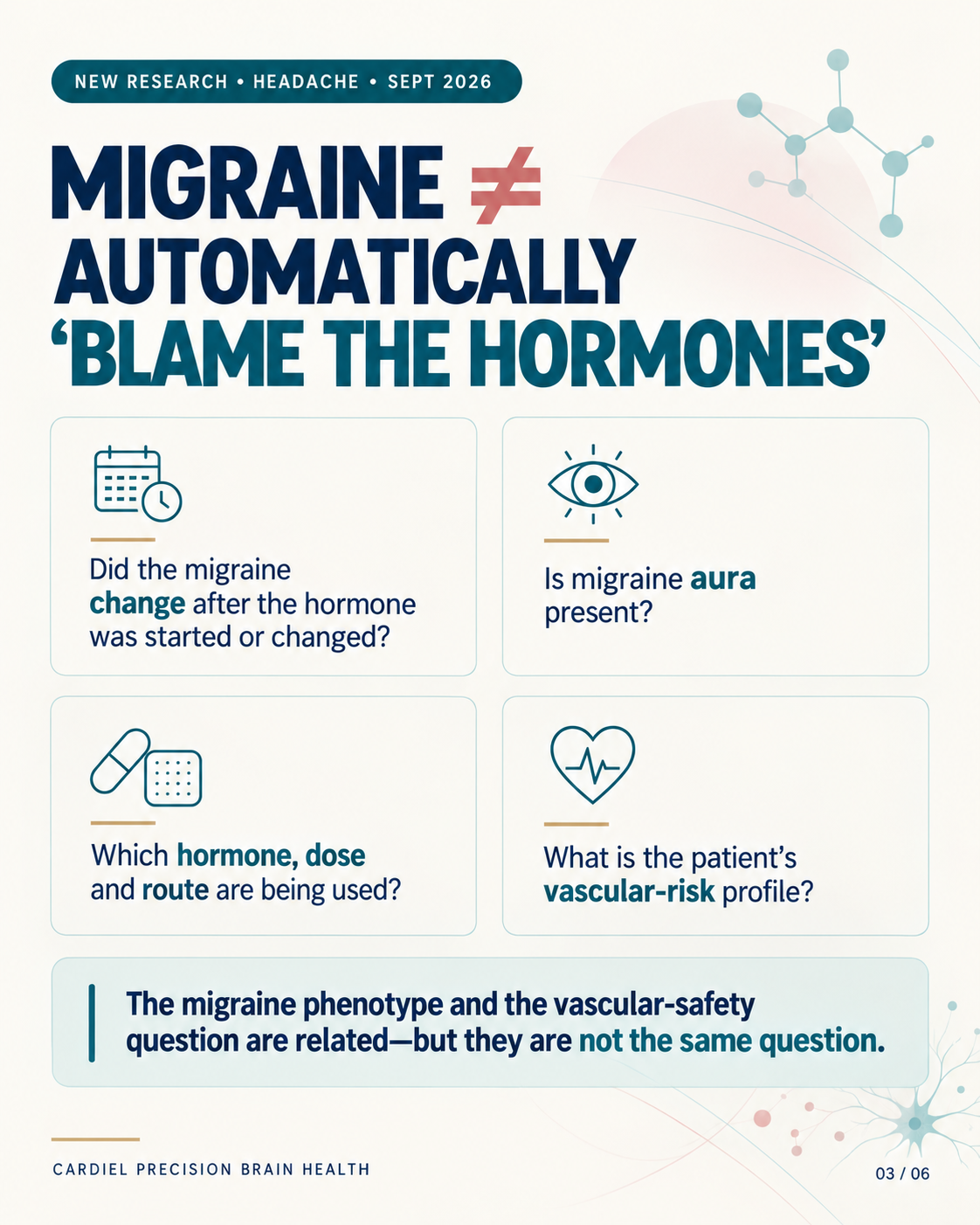
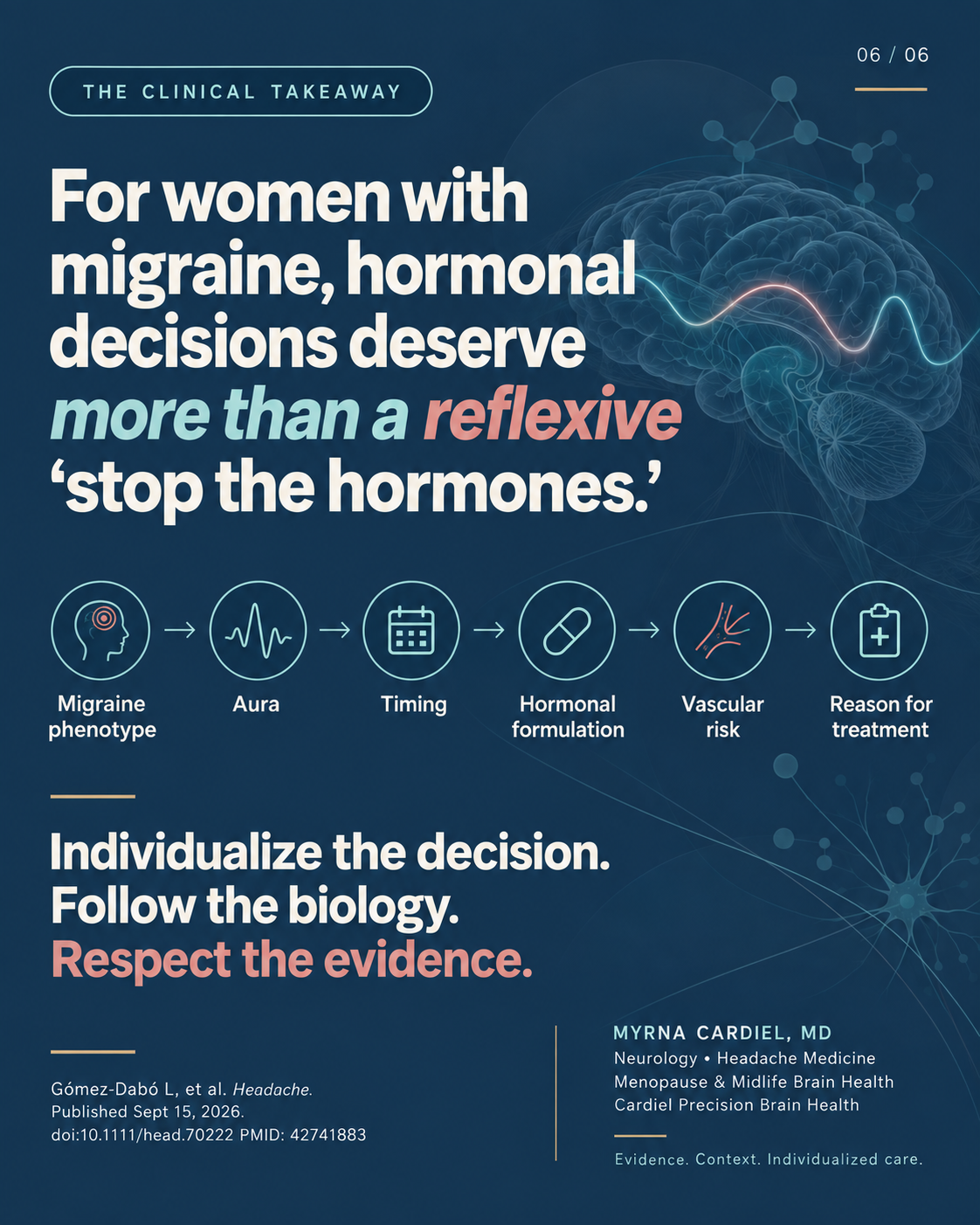
For women navigating migraine, contraception, perimenopause, or menopause, the more useful questions often include: Did the headaches change when the hormonal treatment was started or adjusted? Is migraine aura present? What hormone, dose, and route are being used? And what is the individual cardiovascular and vascular-risk profile?
The slides below summarize what this new study found, why it may matter clinically, and—equally importantly—what the research does not yet tell us.